
The market is extremely crowded with product homogenization—how can packaging design open up new opportunities? Let's explore this using rice noodle packaging as an example
Last year, a client who makes mipi (rice sheets) came to ask about packaging, and was especially puzzled: "My mipi is made with exactly the same process as Old Wang next door. He sells his for 9 yuan, and even when I sell mine for 9 yuan, nobody wants it. Why?"
The craftsmanship is exactly the same as Old Wang next door. He sells for 9 yuan, and when I sell for 9 yuan too, nobody wants it. What’s going on? Are the two rice noodles the same? Yes, they are—both packed in transparent bags with red and green labels. The problem lies precisely in that “same.”
It’s the same rice noodles, but the one we made is packed in a full gift box with a green-dominant color scheme—gold-edged crimping, golden wheat ears encircling the brand mark on the lid, and a line of white hot-stamped “rice noodles” characters in the middle. It looks like an exquisite snack gift box.
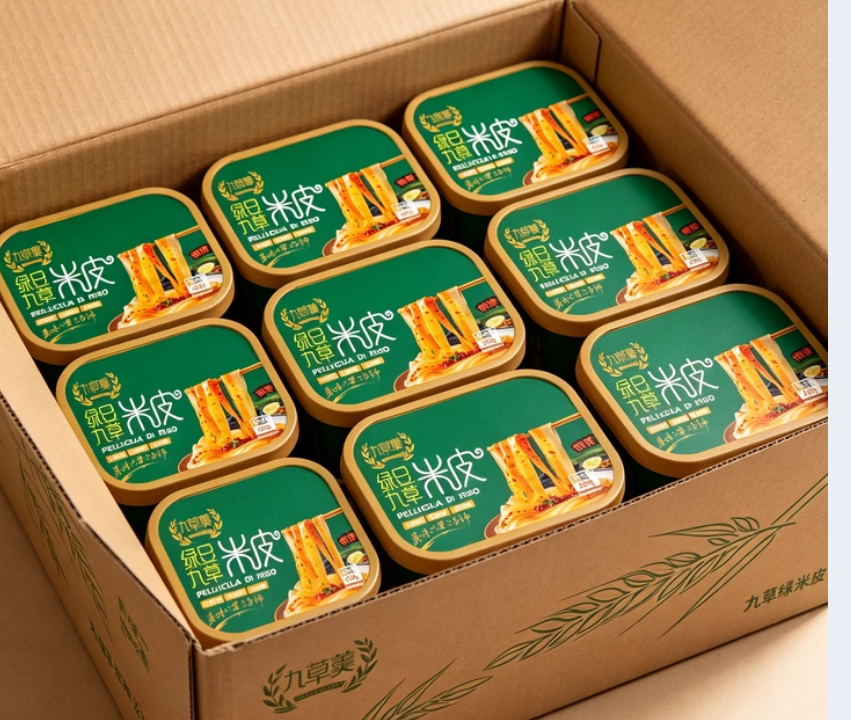
— Green gift boxes neatly arranged inside a corrugated carton
Customers specifically take photos and post them on Moments, saying, “This rice noodle packaging is so pretty, I can’t bear to throw it away—it works as a snack jar.”
So what do you think customers are buying—the rice noodles, or the feeling that “this jar of rice noodles makes me look good and feel reassured”?
There’s a term for this: “perceived value.” Put simply: how much customers think something is worth matters more than how much it’s actually worth when it comes to whether they pull out their wallets.
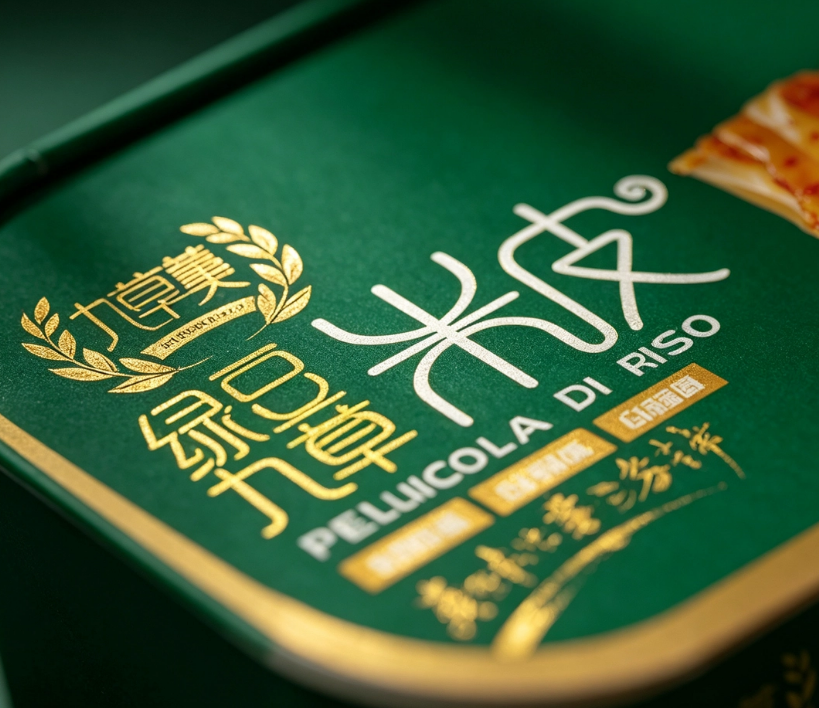
— Close-up of golden wheat ears encircling the lid and white hot-stamped rice noodles
The same rice noodles, packed in a transparent bag, squeezed onto the shelf and mixed in with the bulk dried rice noodles next to it—the customer’s psychological price is street-stall pricing. But put them in a box with a sense of design and place it in the snack section, and customers will compare it with imported snacks, actually feeling they’ve gotten a bargain.
The color and texture of the rice noodles are right there in front of you—that’s “visible freshness,” and it works.
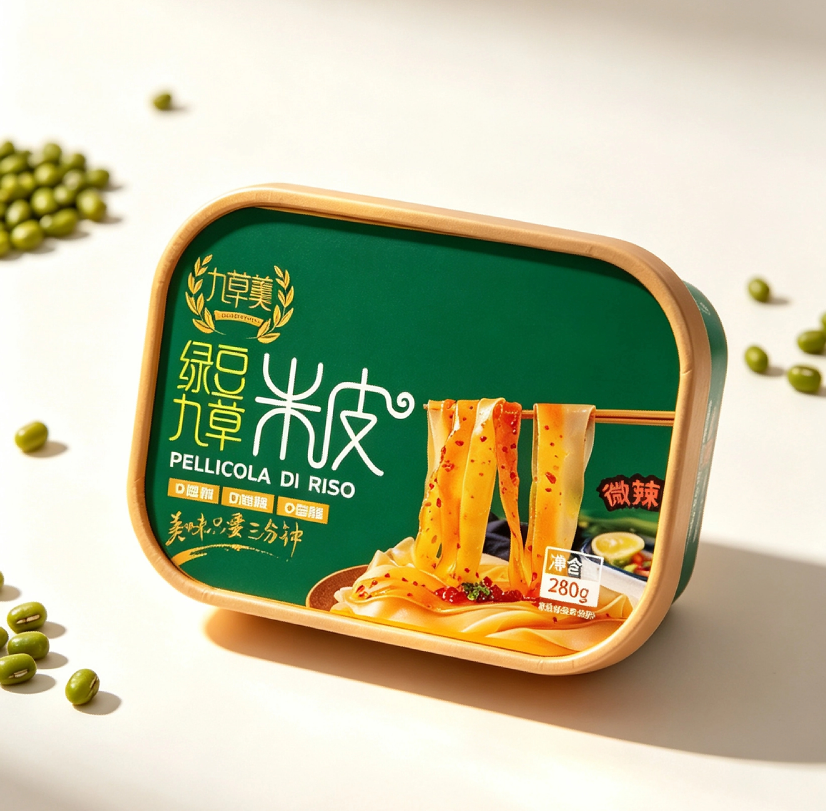
— Single box with transparent window design showing the rice noodles inside
I’m not telling everyone to go make flashy packaging. I’m saying: this outer skin of packaging is the first basis on which customers price a product. Look at used-car transactions—if the seller is dressed smartly, you think the car is in good condition; if the seller shows up in flip-flops, you can’t help but suspect the car has been repaired. First impressions—everyone judges by appearances, and products are no different.
But there’s a pitfall here I have to warn everyone about: the “expensive” look of packaging has to match the product itself. If you take lousy rice noodles and put them in a golden jar, customers take it home, taste it, and the flavor is off—then next time they won’t just stop buying from you, they’ll curse you out. Perceived value is about helping you sell good things at a good price, not about letting you pass off bad things as good.
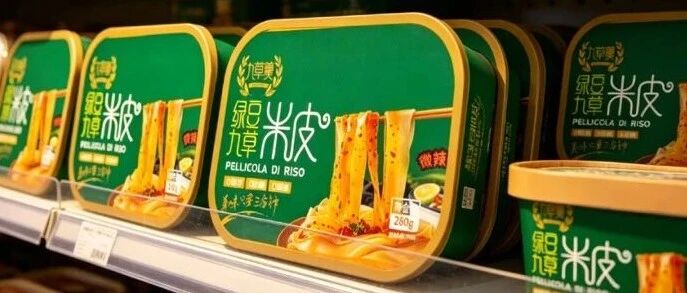
On that row of supermarket cold cases, the green boxes with gold edges are stacked neatly in a line—one glance and they’re all you see.
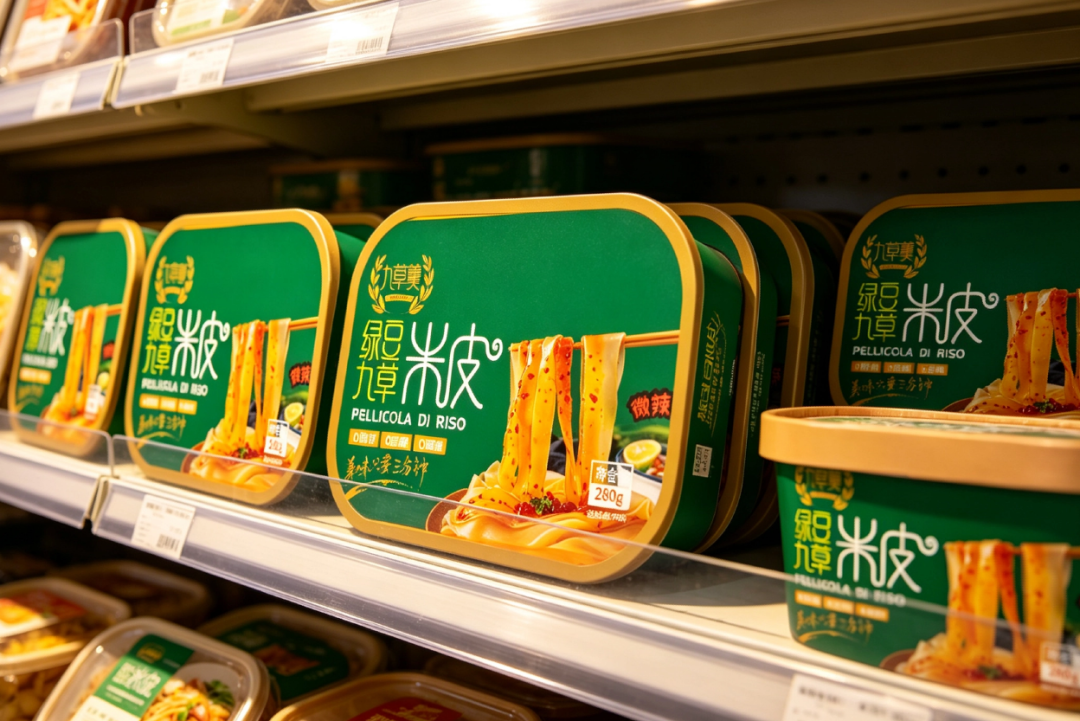
— Actual photo of refrigerated shelf display
Once the approach is right, selling out is only a matter of time.
Sanyao Packaging
Good packaging speaks for itself
About This Case: Quick Answers
How exactly does a product get "seen" on the shelf?
Consumers give you only three seconds in front of the shelf. The most reliable approach designs on two levels: from three meters away, color and shape grab attention; within one meter, information and cultural trust signals stop people in their tracks. The root cause of most products that don't sell isn't that they're bad—it's that their "goodness" never gets shouted out from three meters away.
Can my product use this "perceived value" approach too?
Yes. This logic doesn't discriminate by category—it works as long as your product sits on the shelf looking much like everyone else's and consumers can't recognize you in three seconds. When it comes to execution, we'll build a fresh plan around your category, channel, and price band rather than forcing someone else's face onto yours.
What do you typically charge for product packaging, and how long does it take?
We charge per project, based on category complexity, the number of series, and whether prototyping and extensions are included. Typically 2–4 weeks: the first week sets direction and positioning, the second week delivers concepts, and the third and fourth weeks deepen the work through prototyping and final sign-off. Rush timelines can be compressed, but we recommend leaving time for physical prototyping. Send us your materials for a free diagnosis before we quote.
We're based elsewhere—can we work together online?
Yes. Many of our projects are remote collaborations: materials shared online, concepts reviewed in the cloud, prototypes shipped by courier—no geographic limits, and we work with clients nationwide.
CommentsBe kind, communicate rationally