
In the Age of AI, Agents Can Handle All the Details—What's Valuable About People Is Big-Picture Judgment and Creative Vision
Sanyao: Once AI takes care of the details, the person who can hold the whole thing together becomes even more valuable.
Lately, several bosses have half-jokingly asked me: now that AI can generate images and edit videos, why do we still need a design studio? They’ve got it backwards. AI has flattened the barrier to “making it,” which has pushed “figuring out exactly what you want” to the most expensive position of all.
“This article is about 970 words, roughly a two-and-a-half-minute read. Today I’ll use three real cases we don’t usually bring out to make one thing clear: in the AI era, a person’s value isn’t in the details—it’s in grasping the whole.
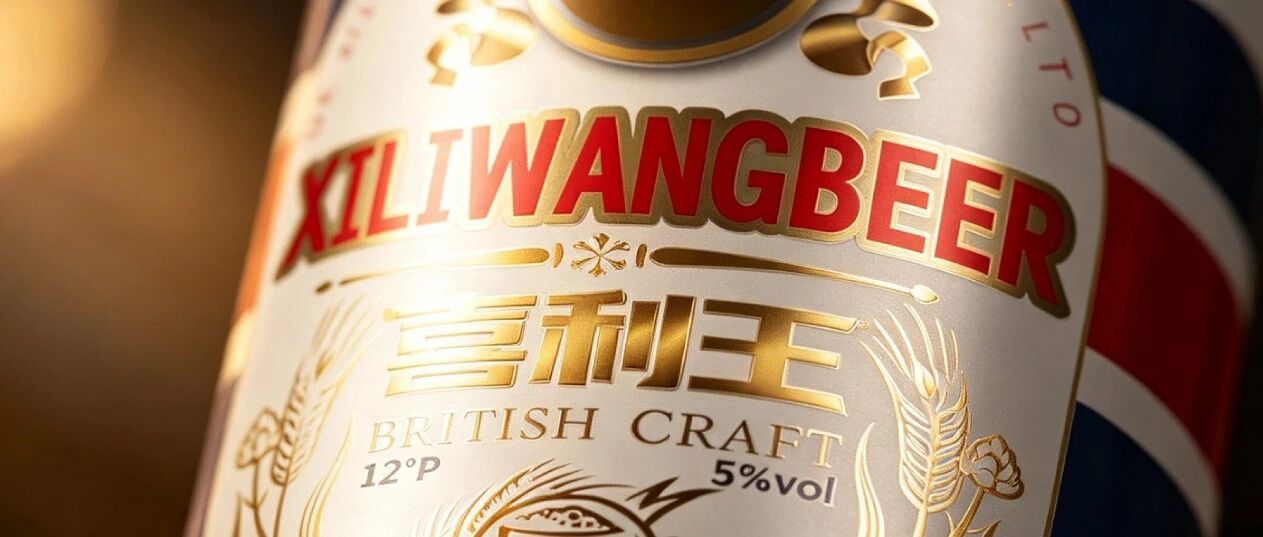
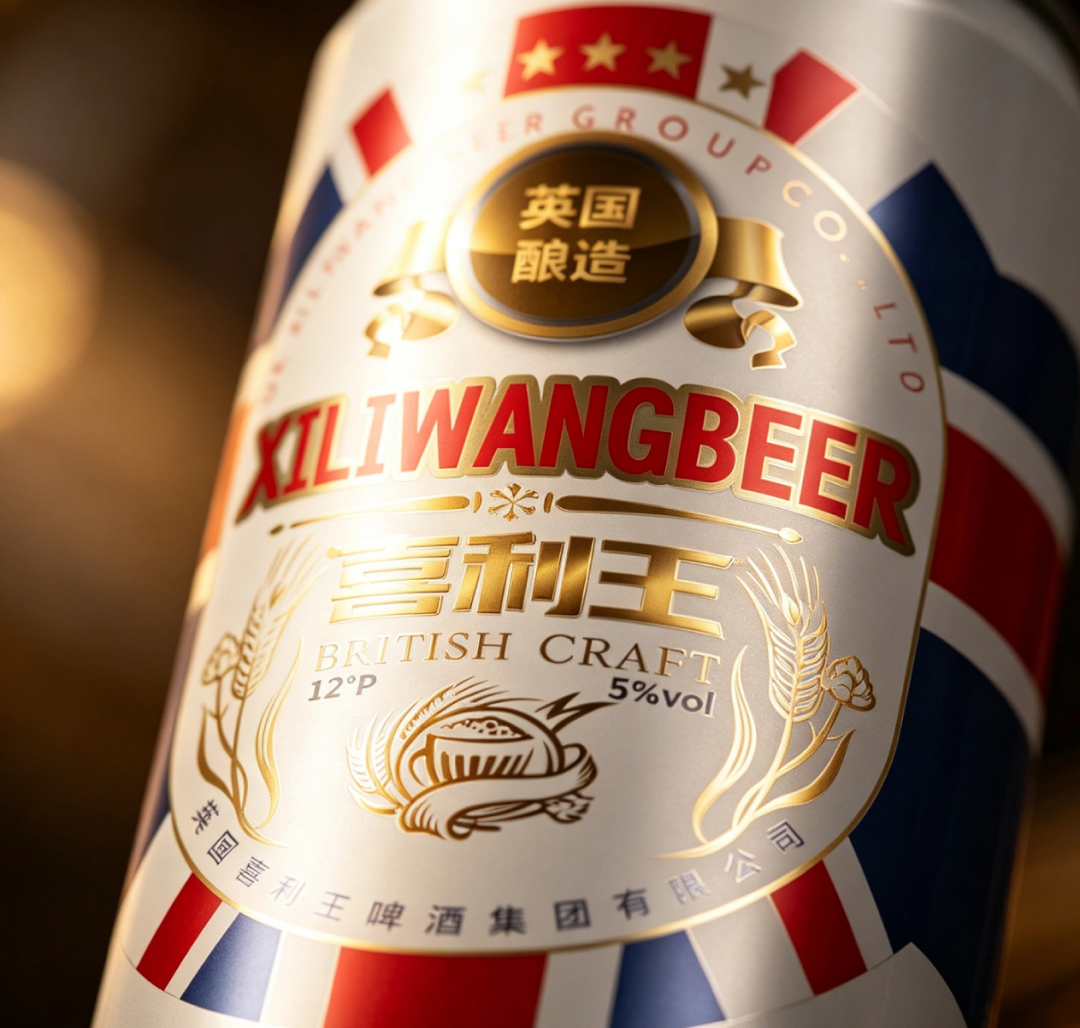
Here’s a true story. A client selling imported beer came to me with a pile of reference images and said, “I want it high-end, I want it British, I want that craft-beer feel.” AI can spit out thirty can designs in ten minutes, each with a Union Jack element, golden wheat ears, and fancy script English. But the problem wasn’t whether there were enough designs—it was: who exactly is this can of beer meant to be sold to?
The direction we finally settled on: a base of bold red and deep blue diagonal stripes, with only “XILIWANGBEER” and “喜利王” on the front of the can, a round “British Brewed” badge in the middle, and a line underneath reading “BRITISH CRAFT 12°P 5%vol.” No flamboyant illustrations, no eight-hundred-word story. Because what he cared about wasn’t how pretty it looked—it was whether, in that one second in front of the convenience-store cooler, a customer could pick out “this bottle is different from the other domestic beers” across three rows of competitors. AI finished the details, but “where to aim” was my call.
Now a beef jerky case. The client is a specialty-goods boss from Inner Mongolia—great raw materials, authentic air-drying craft—but the packaging he’d had someone make before was a murky black blob plastered with “ancestral secret recipe, grassland select, artisanal handcrafted.” He said it looked like it had character. I shook my head: do you want people to look at the packaging, or to buy a bag and try it?
We dropped the black background and tiny text, and filled most of the package with a real close-up of hand-torn beef. Up top, the Mongolian script “乌兰牛” as the brand name, and below it directly: “A taste from Mongolia · Hand-torn beef jerky · Numbing-spice flavor · Net weight 180g.” The whole image says just one thing: tear it open and it’s the meaty aroma of the grasslands. Of course AI can help him adjust color tones, generate textures, and retouch the portrait to look better—but the judgment of “shifting the selling point from ‘culture’ back to ‘craving’” can only be made by a human.
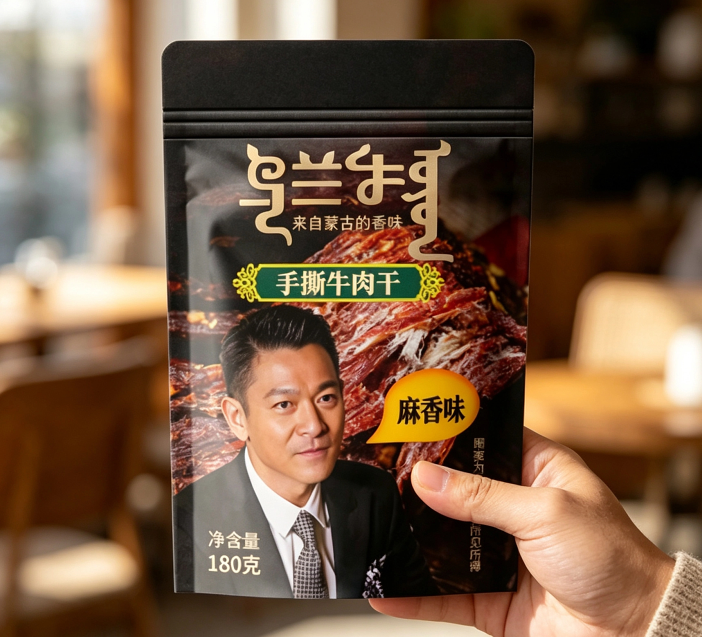
乌兰牛 Hand-Torn Beef Jerky
And then there’s a small-format baijiu. The client wanted a baijiu young people could carry in their pocket. At first he wanted to copy the big brands’ festive red style. I said you can’t outdo them that way—better to go the opposite direction. In the end the bottle became deep blue all over, with a few snowflakes and chestnut leaves drifting across the body, the product name “北方栗度,” a 235mL format, and the 52%vol ABV printed right on it. It’s not a bottle for toasting the boss—it’s a bottle a young person tucks in their pocket after work and drinks with friends over skewers. AI can render this blue bottle beautifully, but the overall direction of “make it small, make it cold, make it young” requires thinking through the market first.

北方栗度 235 Small-Format Baijiu
Notice something? All three cases are essentially the same: AI handles “making it,” and the human handles “thinking through which direction to make.” Designers used to be valuable for knowing Photoshop, hand-drawing, and modeling; now AI makes those details cheaper and cheaper, and the valuable skill has flipped to—whoever can see the battlefield clearly first, understand the user, and decide what the product should look like. That’s what’s valuable now.
So I often tell bosses: you don’t need to learn video editing, prototyping, or coding, but you do need to think through these three things: first, who pays for you; second, why they buy now instead of from the guy next door; third, where you’re genuinely different from everyone else. Get these three clear and the instructions you give AI won’t go off track; otherwise, the more you use AI, the more off-track versions you’ll just get—and the more exhausted you’ll be.
The future doesn’t mean knowledge is unnecessary—it means people who can only repeat details are. Those who can untangle the whole picture will only become more valuable.
“Packaging strategy isn’t drawing pictures—it’s turning business judgment into visible competitive edge.
This article’s text and images are shown only as examples of Sanyao Planning & Design’s creative work; all brands and products mentioned belong to their respective clients.
About This Case: Quick Answers
Can my product use the product strategy described in this article?
Yes. This logic isn't picky about category—it works as long as your product sits on the shelf looking like everyone else's and consumers can't recognize you in three seconds. When it comes to execution, we'll set a new plan based on your category, channel, and price band rather than forcing someone else's face onto yours.
What do you generally charge for product packaging, and how long does it take?
We charge per project, depending on category complexity, the number of SKUs, and whether it includes prototyping and extensions. Typically 2–4 weeks: week one sets direction and positioning, week two produces concepts, and weeks three and four refine, prototype, and finalize. Rush jobs can be compressed, but I'd recommend leaving time for physical samples. Send us your materials for a free diagnosis before we quote.
We're in another city—can we collaborate online?
Yes. Many of our projects are remote collaborations: materials coordinated online, concepts reviewed in the cloud, and prototypes shipped by courier. There's no geographic limit—we work with clients nationwide.
Is packaging a cost or an asset?
It's pricing power. Treat it as a cost to cut, and it gets clawed back out of your selling price; treat it as an investment, and it tells your story of value before the consumer even reaches for their wallet. Good packaging does just one thing: it makes the product look—and genuinely be—worth that price.
CommentsBe kind, communicate rationally