
Freshly ground, zero additives—why won't young people buy it or buy into it?
Traditional categories are making a comeback. The hard part isn't changing the flavor—it's translating your "good" into a phrase that young people feel says "this is so me." Yigu Yiyang freshly ground soy milk turns real, freshly ground ingredients into an attitude young people are willing to show off.

A few days ago, a soy milk boss poured his heart out to me. His exact words:
“I grind my beans fresh, zero additives—ten times healthier than milk tea. But young people won’t even give it a proper look. They all run off to buy milk tea.”
I asked him: In the eyes of young people, what is your soy milk?
He thought for a moment and said: Breakfast, I guess. What my dad’s generation drinks.
I said, then you’re in trouble. Once you’re labeled “what my dad drinks,” young people won’t touch you no matter how thirsty they are—it’s not that it doesn’t taste good, it’s that “it has nothing to do with me.”
- The good you see and the good customers perceive are two different things
I’ve seen this too many times. The boss holds up the product, looking aggrieved: I’ve got such a good thing, why don’t they recognize it?
The problem is right there. “Freshly ground, zero additives, ten times healthier than milk tea”—this is the good in your eyes, not in the customer’s. The craft you spent three years perfecting in the workshop—in three seconds in front of the cold case, they can’t see a single word of it.
To put it bluntly, this is self-indulgence. You’re moved to tears, the customer is clueless.
Customer perceived value never looks at how much effort you put in; it only looks at whether you speak human language on the outside.
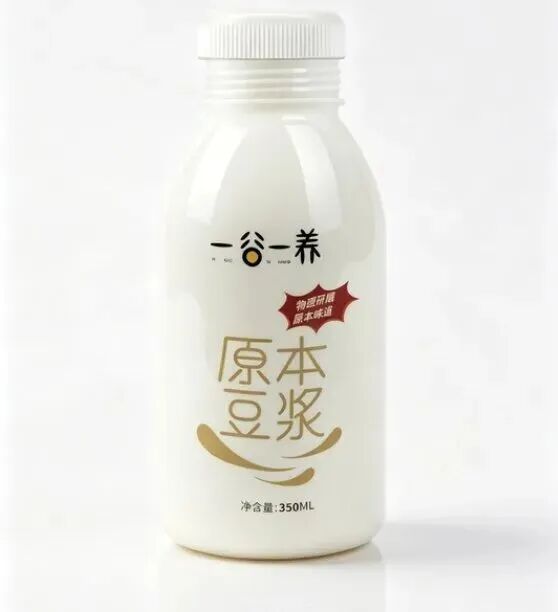
Sanyao Design case · Yigu Yiyang freshly ground soy milk
- Yigu Yiyang didn’t change the flavor—it changed the “story”
For this bottle of Yigu Yiyang freshly ground soy milk, the first thing we did right was not try to cater to young people’s taste buds. It’s still that bean aroma, still freshly ground, not a thing changed.
What changed? We retold the “old” story.
The original story? “Ancient method passed down, artisan craftsmanship.” Translated: this stuff is old. Young people hear that and think, oh, then my dad can drink it.
We translated the old value of “freshly ground, real ingredients” into a phrase young people understand—I chose a more real life.
Think about the difference between these two lines. One says “how my ancestors did it,” the other says “who you are.” The former is an instruction manual, the latter is an attitude.
It’s not selling “grandma’s taste” at all—it’s selling “I have standards for my life.” With that, soy milk goes from “uncool” to “cool.”
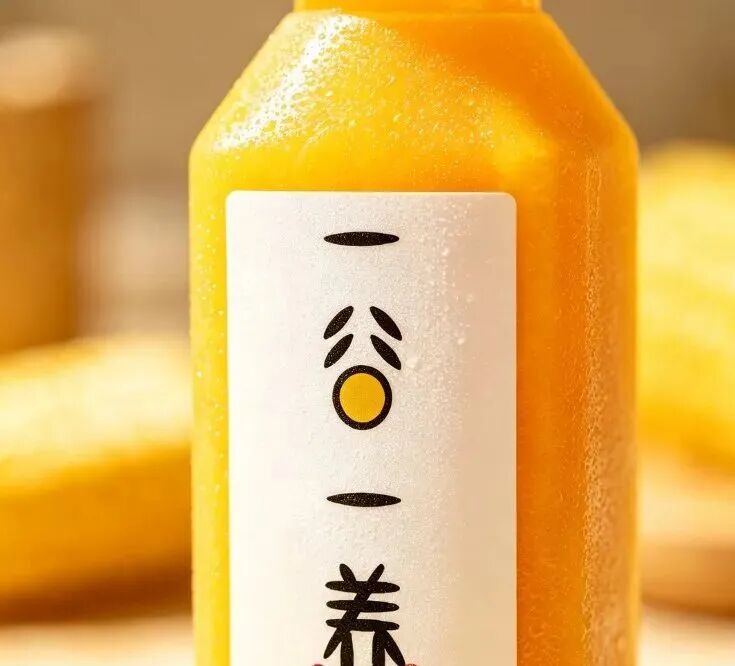
Sanyao Design case · Yigu Yiyang same series
- The solution for business is always “addition,” not “replacement”
There’s another insight here—let me chat with you about it.
People always ask: Should traditional categories go all in on new channels and new gimmicks, and abandon the old? Nonsense. In business, the solution is addition, not replacement. The fresh-grind craft is your substance—throw it away and you’re nothing; the new story is your surface—without it, young people won’t give you a glance. Substance plus surface together—that’s a bottle of soy milk that can sell at a premium.
The product is responsible for tasting good, the packaging for being seen, the copy for being remembered—each does its own job, no one carries the others’ load.
Many bosses want one package to solve everything—that just won’t work. Packaging is that three-second moment; within three seconds, make people look twice. The rest, let the product prove itself.
- Occupy a scenario, not just a function
Last, the most crucial point. For a traditional category to make a comeback, it’s not about flavor—it’s about whether young people are willing to feel “this is so me.”
“A cup with breakfast” is a functional scenario—narrow as can be, and a crowd fighting over it. But “I have standards for my life” is an emotional scenario—capture the latter, and you’re not competing with other soy milk brands; you’re competing with milk tea for people.
Follow this scenario down, and you’ve got your seed audience: first move those young people who “know they should treat themselves better,” get them to share, to talk, and let it ripple outward—far easier than distributing door to door.
First let a small group feel “this is mine,” then let a large group wonder “what is this.” Don’t get the order wrong.
- Here’s a self-test for you
Don’t just listen to me—test it yourself. Go home, cover up the line on your product that says “ancient method passed down” or “artisan masterpiece,” and ask one question:
With that line covered, does your product still look like something a young person would pick up on their own?
If it does, you’re selling words, not goods. If it still looks that way—then your comeback has just begun.
Traditional categories shouldn’t resign themselves to “old stuff should be cheap.” Cheap is mostly because you haven’t retold the story.
— Sanyao
Years of packaging strategy · Wuhu, Anhui
Packaging determines perceived pricing—your product deserves to be seen properly
About This Case: Quick Answers
How can old categories get young people to buy in?
Change the persona, not the flavor. If the flavor is right but the persona hasn't changed, young people will still label you as "what my dad drinks." Repackage it into a look and attitude this generation is willing to hold in their hands—premium pricing isn't begged for; it naturally follows when "this is so me" rings true.
Can this approach from Yigu Yiyang freshly ground soy milk work for my beverage product too?
Yes. This logic isn't category-specific—it works as long as your product looks like everyone else's on the shelf and consumers can't recognize you in three seconds. When it comes to implementation, we'll rework the plan based on your category, channel, and price range—we won't force-fit someone else's face.
What's your typical fee and timeline for beverage packaging?
We charge per project, depending on category complexity, number of series, and whether sampling and extensions are included. Typically 2–4 weeks: first week to set direction and positioning, second week for concepts, third and fourth weeks for refinement, sampling, and final files. Rush jobs can be compressed, but we recommend leaving time for physical samples. Send your materials for a free diagnosis before we quote.
We're not local—can we collaborate online?
Yes. Many of our projects are remote: materials shared online, concepts reviewed in the cloud, samples shipped by courier. No geographical limits—we work with clients nationwide.
CommentsBe kind, communicate rationally