
The Ultimate Move for Nailing Food Sales and Packaging: Crispy Chicken Packaging: Catch the Eye from Afar, Win the Heart Up Close, Win Them Back with Taste
Three Demons: Packaging handles the first purchase, the product handles the repeat purchase. In an era where traffic costs more than gold, get those three seconds on the shelf right first.
“
This article is about 1,400 words and takes about four minutes to read. Today we’ll use our recently completed “Tuuzaozi Crispy Chicken” case to explain three things about food packaging: how to make people stop on the shelf first, how to win them over once they walk closer, and why all of this ultimately has to come back to the product’s own strength.
    Bosses, have you ever calculated how high the cost has climbed to pull a new customer off the shelf into your hands?

    Paid short-video promotion is expensive, livestream slot fees are expensive, and influencer commissions are expensive too. The cheapest traffic is actually your own product standing on the shelf, keeping passersby there by itself. But this ability to "keep people by itself" is half the packaging's face and half the heart written into the packaging. Get the face right, and people walk closer; write the heart right, and people are willing to pay; and whether they come back after paying is your product's business.

 Packaging can't take the blame for quality, but it must take responsibility for the first purchase.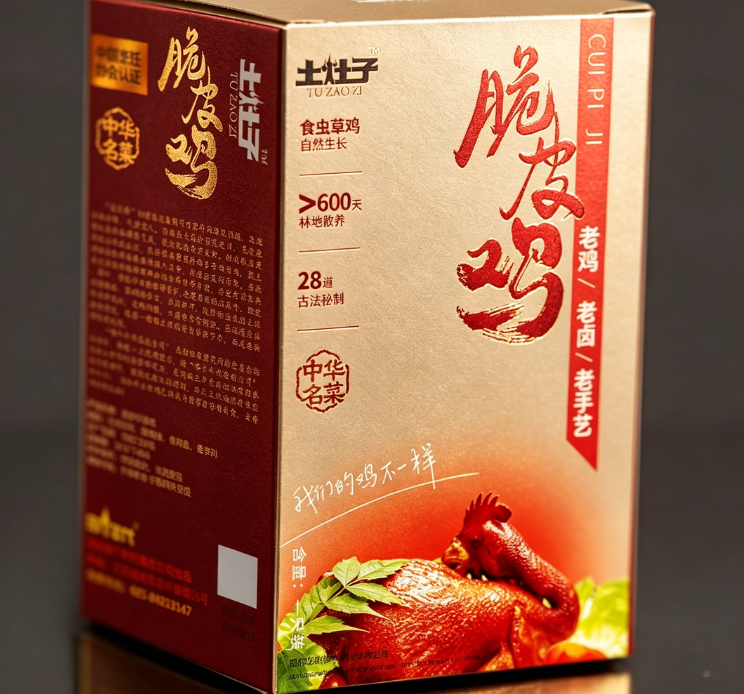
Front detail of the crispy chicken packaging
   When we took on the Tuuzaozi Crispy Chicken case, the boss said one thing: my chicken is different from everyone else's, but customers can't tell at a glance.

  This is the root cause of why most specialty food bosses get stuck on the shelf. It's not that you're not good enough; it's that your "good" fails to shout from three meters away. We split the entire design into two layers: from one to three meters away, grab attention with color and shape; within one meter, stop people with information and cultural trust signals.

 What does the far view rely on? Large areas of contrasting color, a recognizable product image, and cultural symbols that can be understood at a glance.

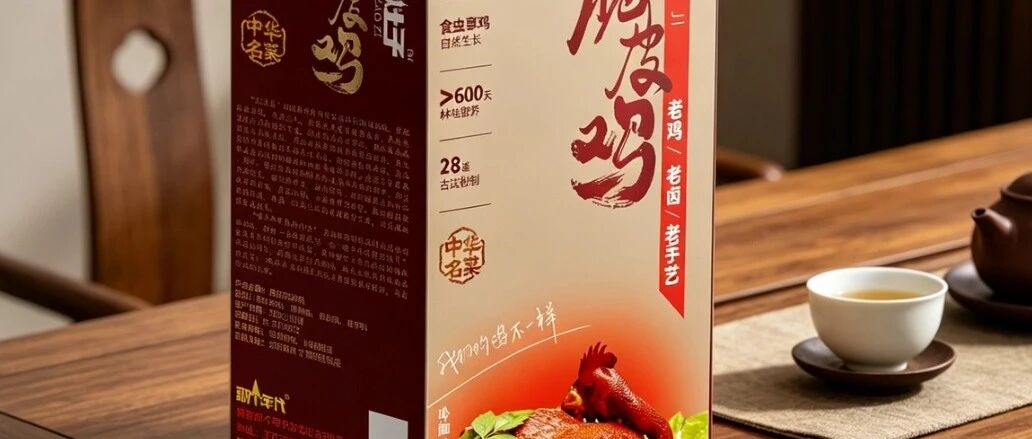
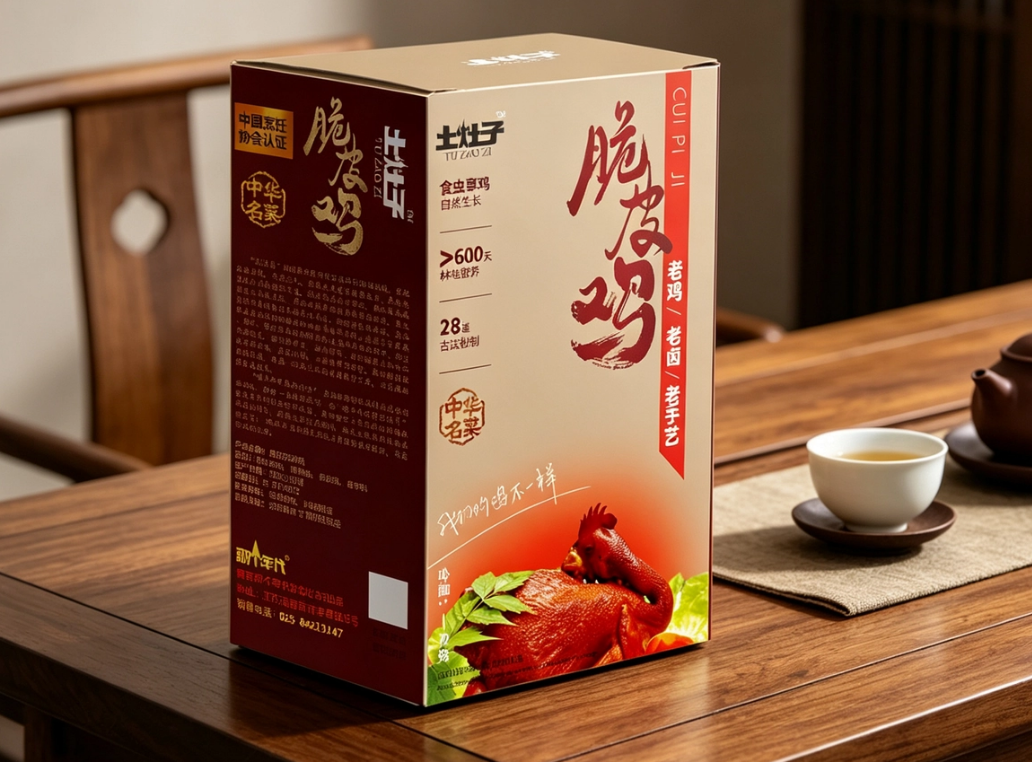
 On the front of the Tuuzaozi box, we used a gradient from deep red to off-white, with the three large handwritten calligraphy characters "Crispy Chicken" in the middle, and a glossy, whole roast chicken placed directly in the lower right corner. Standing three meters from the supermarket cold case, what grabs you first isn't the logo—it's the color of that chicken and the impact of those gold characters on a red background. This is what we mean by "attract from afar"—it doesn't rely on slogans; it uses visuals to first hook people from the aisle.

   But hooking them is only the first step. Consumers' trust in food advertising is pitifully low right now—the more you say you're good, the more they think you're bragging.

 So winning the heart up close isn't about attacking with "I'm good," but with "why should I believe you." On the left side of the Tuuzaozi packaging, we didn't cram in self-praise. Instead, we cut the trust signals into several blocks: "Cordyceps-fed chicken, naturally grown," ">600 days, free-range in woodlands," "28 steps, ancient secret recipe," with a "Famous Chinese Dish" seal stamped beside them. These things aren't creativity—they're facts. Put facts in the right place, and they carry their own persuasiveness. When consumers pick it up, they don't need to read every small line—just the two numbers "600 days" and "28 steps" already label this box of chicken in their minds as "not an assembly-line product."

  As for cultural emotion, we didn't turn it into a museum display board. Many bosses, the moment they hear "traditional culture," like to pile auspicious clouds, dragons and phoenixes, and red pillars onto the packaging. That's self-indulgence. Consumers' emotion toward traditional culture doesn't come from having many elements—it comes from "this thing has roots."

  The name Tuuzaozi itself carries the flavor of a stove fire, a farmhouse, and old craftsmanship. We simply amplified that feeling: the calligraphy is handwritten brush script, not a computer font; the seal-style "Famous Chinese Dish" isn't decoration, it's a category endorsement; the small line "old chicken, old braise, old craft" elevates it from "a prepared food" to "a kind of heritage." What consumers are buying isn't chicken—it's the comfort of telling themselves, "I eat well, I eat real food."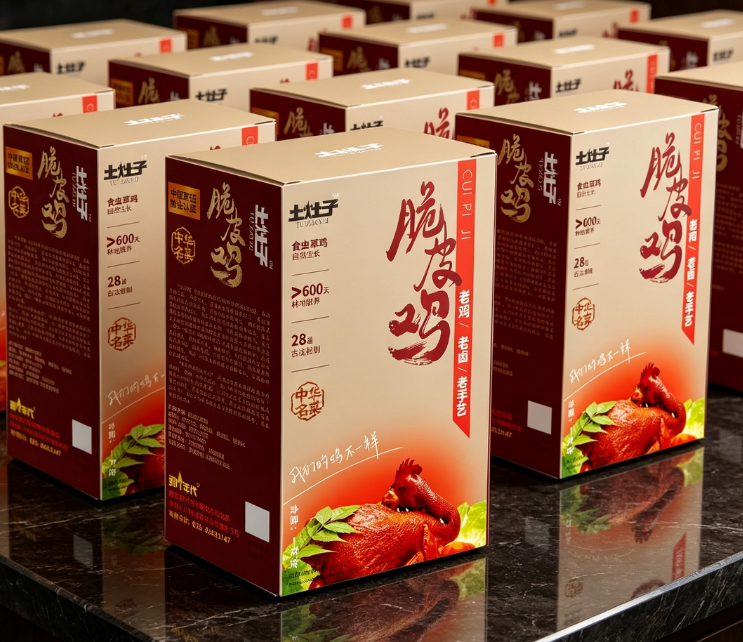
Crispy chicken shelf display effect
  When they're hesitating in front of the shelf over whether to take this box or the one next to it, cultural emotion is that gently nudging hand. It's not a hard sell; it's making them nod inwardly: this one looks a bit more reliable.

 But here I have to pour a bucket of cold water.

 No matter how good-looking the packaging is or how complete the trust signals are, it can only handle the "first purchase." If a consumer buys once because it's pretty, and then opens it and takes a bite—if the skin isn't crispy, the meat isn't fragrant, the braise tastes off—the "600 days" and "28 steps" on your packaging instantly become a joke, and next time they won't even glance at you.

 This is why, when we do packaging design now, we always ask the boss one question first: can your product withstand repeat purchases?

 Packaging is traffic; the product is the repeat purchase. Traffic is getting more and more expensive, and repeat purchases are the hardest foundation for survival in this era. If a customer buys from you once, you're losing money on acquisition cost; when a customer buys from you ten times, that's when they truly start making you money. Packaging is responsible for making them stop the first time; the product is responsible for making them want to come back the tenth time.

   So in the Tuuzaozi case, we held something back in the design: a red-and-gold gift box. The single box is for everyday eating; the gift box is for giving to relatives, elders, and clients. The first purchase is solved by packaging, the repeat purchase by the product, and the gift box opens up the "gifting" scenario—which means an entire additional purchase reason beyond the repeat purchase. People giving gifts don't buy casually; they pick the one that looks most "like it has a story." And when the recipient takes a bite and likes it, next time they'll go find it and buy it themselves. Packaging and quality form a closed loop here.

   Bosses, if you're also making a good food product, don't rush to dump your whole budget into livestreams. First think through those three seconds on the shelf: from three meters away, why should anyone look at you? Within one meter, why should anyone believe you? After eating, why should anyone come back to you?

 Catch the eye from afar, win the heart up close, win them back with taste. Packaging can handle the first two steps; the last step is up to you.
This article’s text and images are presented solely as a showcase of Sanyao Planning & Design’s creative work. The brands and products mentioned belong to their respective clients.
About This Case: Quick Answers
Does packaging really take the blame for quality?
Packaging can't take the blame for quality, but it must take responsibility for the first purchase. Packaging is responsible for making people walk closer and making them pay; whether they come back after paying is your product's business. Repeat purchases depend on the product—packaging shouldn't claim credit or take the blame.
How can specialty foods "shout from three meters away" on the shelf?
Split the design into two layers: from one to three meters, grab attention with color and shape; within one meter, stop people with information and cultural trust signals. The root cause for most specialty food bosses isn't a bad product—it's that the "good" fails to shout from three meters away.
How many layers should packaging design be built in to be safest?
Catch the eye from afar, win the heart up close, win them back with taste. The first layer solves "being noticed," the second solves "being believed," and the third is the product's own quality delivering on the promise. Packaging nails the first two layers; leave the third to the food itself.

CommentsBe kind, communicate rationally