
Many people don't know: when business owners hire a design firm for packaging design, it's not about how good the packaging mockups look — it's about "whether this deal will close"
After years in restaurant packaging, I've learned one very practical truth: restaurant owners don't care at all what the packaging looks like. What they care about is that moment when the customer receives it and feels this meal was worth it
Author: Sanyao Packaging Design | 5 min read
After all these years in packaging, I’ve learned one very practical truth: the boss doesn’t care at all what the packaging looks like. What he cares about is whether the customer, the moment they get it in their hands, feels it’s worth it.
We took on a case for a crispy hand-torn chicken shop. The craft was impeccable, and customers lined up to buy. But his takeout packaging had always used the cheapest kind of clear plastic bag, so by the time customers got it, the presentation was completely gone. When he came to me, his first sentence wasn’t “design me a nice-looking bag” — it was “help me figure out how to make customers feel this chicken is worth the price.”
What he was buying was a solution, not packaging design.
01
First, get inside his business
The first step in selling a solution is to understand what’s actually happening on the client’s end. In that hand-torn chicken owner’s business, what was happening was this: dine-in was great. But once it went into a clear plastic bag, it felt like a ¥9.9 item.
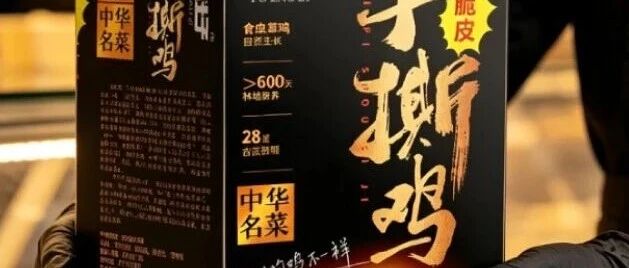
What we later made for him was a gift-box-style packaging with gold foil stamping on a black background, with the whole chicken packed inside — lift the lid and it’s like unwrapping a gift. When customers posted it to their social feeds, the captions became “this chicken looks appetizing just by looking at it.”
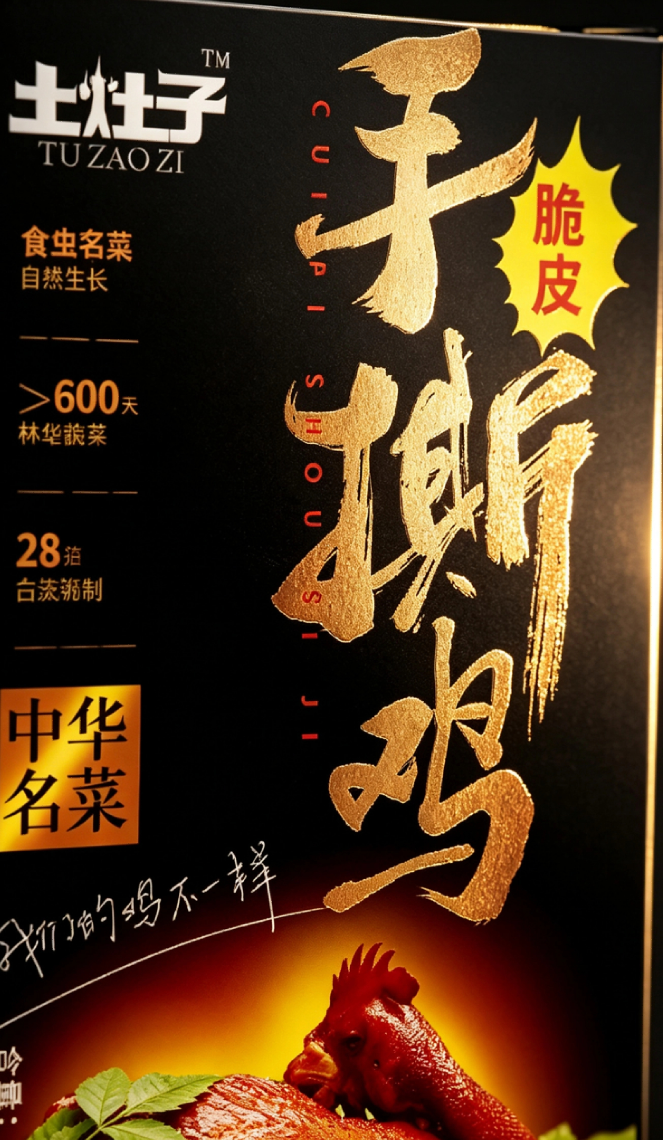
— Tuzhaozi Hand-Torn Chicken — black-background gold-foil gift box
02
Translate features into results
A lot of people in packaging tell clients, “We used specialty paper, did embossing, designed illustrations” — and the client feels nothing. Because what he wants isn’t these terms, it’s results.
This box’s features are the means; the result is what he actually wants. Selling packaging is essentially selling three results: sells better, saves hassle, and gives more face.
I used to only talk about process specs too, until a client woke me up with one sentence: he said, don’t tell me how good this paper is, just tell me — if I use this box, will customers feel it’s worth a little more? From then on, the first page of my proposals always states the results, and the process specs go on the last page.
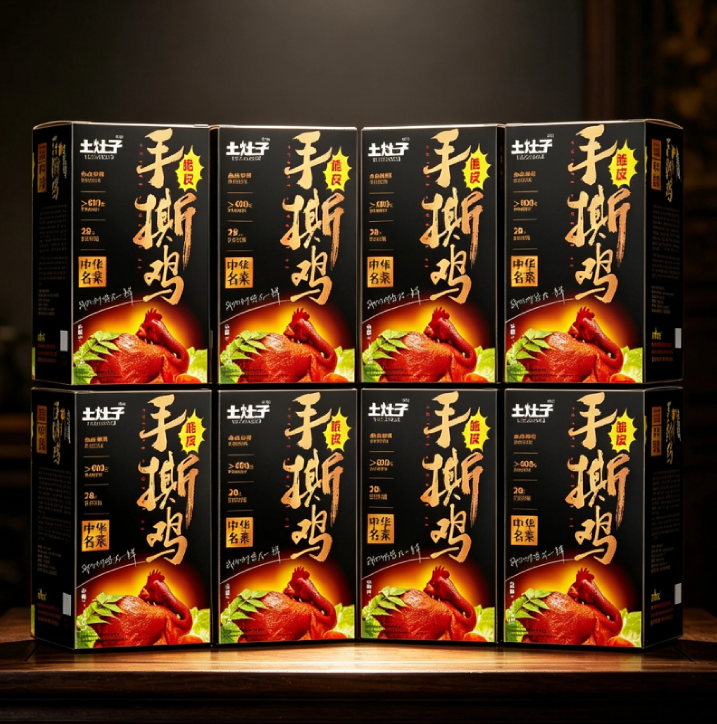
— Tuzhaozi Hand-Torn Chicken — stacked display of red chicken graphics
03
A solution is a three-piece set, not a single image
A real solution has at least three things: product, service, and guarantee.
The product is the packaging itself — good-looking and easy to use; the service is the supporting work — helping you calculate dimensions, run to the factory, control costs; the guarantee is that someone’s accountable when problems arise — if this batch of boxes prints with off colors, the next batch gets reprinted right away, so your opening date doesn’t get held up.
Just handing over a single design mockup isn’t a solution. A good supplier paves the whole road for you, from “buying boxes” to “boxes arriving at the store.”
04
Don’t just ask “how much” — first ask “how far do you go”
If you’re currently looking for packaging for your own restaurant product, don’t start by asking for a quote. First ask the other party three questions: Have you done this before? Do you offer follow-up service? Can you produce a mockup first so I can see the effect and try it out?
If they can answer those, then talk price. In the packaging business, cheap is everywhere; people who treat your business like their own are rare.
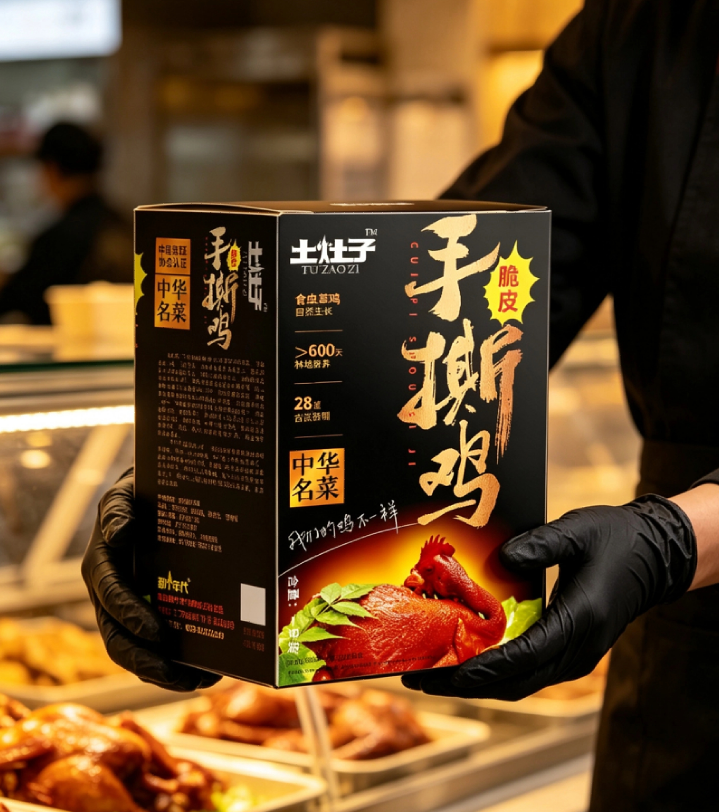
— Tuzhaozi Hand-Torn Chicken — product display details
(Content generated by AI, for reference only)
About This Case: Quick Answers
Are finishing processes on packaging (foil stamping, matte coating, etc.) worth it?
Spending a few extra dimes to a dollar per bottle buys you a texture that lights up instantly under the counter lights, and the gut feeling that "this bottle isn't cheap." Finishing isn't showing off technique—it's money spent making consumers willing to believe it's worth the price, and that dollar comes back doubled in the selling price.
Can my product use the product playbook described in this article?
Yes. This logic doesn't discriminate by category—as long as your product sits on the shelf looking like everyone else's and consumers can't recognize you in three seconds, it works. When it comes to execution, we'll redefine the plan around your category, channel, and price band rather than forcing someone else's face onto yours.
What do you typically charge for product packaging, and how long does it take?
We charge per project, depending on category complexity, the number of series, and whether prototyping and extensions are included. Typically 2–4 weeks: week one sets direction and positioning, week two delivers concepts, and weeks three and four deepen, prototype, and finalize. Rush timelines can be compressed, but we recommend leaving time for physical prototyping. Send us your materials for a free diagnosis first, then we'll quote.
We're in another city—can we collaborate online?
Yes. Many of our projects are remote collaborations: materials coordinated online, concepts reviewed in the cloud, prototypes shipped by courier—no geographic limits, and we work with clients nationwide.
CommentsBe kind, communicate rationally